
BLOG

- Home
- Blog
- Plastic Polymer Composite Article
- What Is a Transparent PVC Pipe? Things You Need to Know
What Is a Transparent PVC Pipe? Things You Need to Know
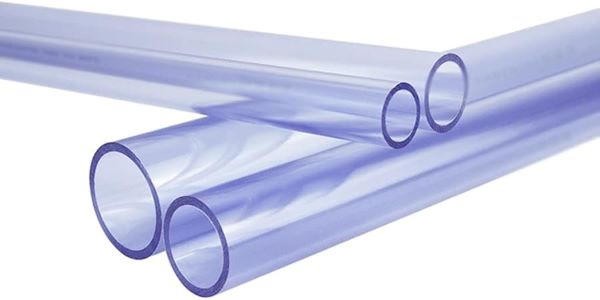
What is a transparent PVC pipe, and why has it become a top choice in modern flow monitoring systems? This article provides an in-depth overview of its structure, manufacturing process, and practical applications, helping engineers and contractors gain the most accurate understanding before making an investment decision.
What is a transparent PVC pipe?
To clearly understand what a transparent PVC pipe is, we first need to know that it is a special variant of Polyvinyl Chloride (PVC). Unlike conventional gray or white PVC pipes, which contain a high amount of fillers such as stone powder (calcium carbonate), transparent PVC pipes are manufactured from virgin PVC resin with extremely high purity and a specialized additive system to ensure optimal light transmission.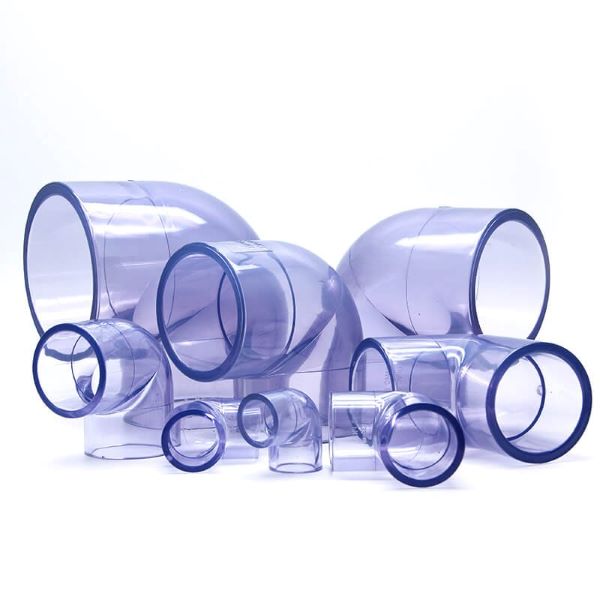
A transparent PVC pipe is manufactured from virgin PVC resin with extremely high purity
What is a transparent PVC pipe?
To clearly understand what a transparent PVC pipe is, we first need to know that it is a special variant of Polyvinyl Chloride (PVC). Unlike conventional gray or white PVC pipes, which contain a high amount of fillers such as stone powder (calcium carbonate), transparent PVC pipes are manufactured from virgin PVC resin with extremely high purity and a specialized additive system to ensure optimal light transmission.
A transparent PVC pipe is manufactured from virgin PVC resin with extremely high purity
Basically, a transparent PVC pipe can be defined as a piping system that allows direct visual observation of the condition of the liquid or gas inside without the need to dismantle the system. This type of pipe is commonly manufactured to SCH40 (Schedule 40) or SCH80 standards, offering a perfect combination of the mechanical strength of rigid plastic and the visibility of glass, while being far less fragile than glass.
The concept of clear PVC piping goes beyond decorative materials. In engineering applications, it functions as an extended sight glass, enabling technicians to monitor air bubbles, changes in chemical color, or the accumulation of deposits within the pipeline. If you are wondering what a transparent PVC pipe is in an industrial context, this is precisely the optimal solution for closed-loop systems.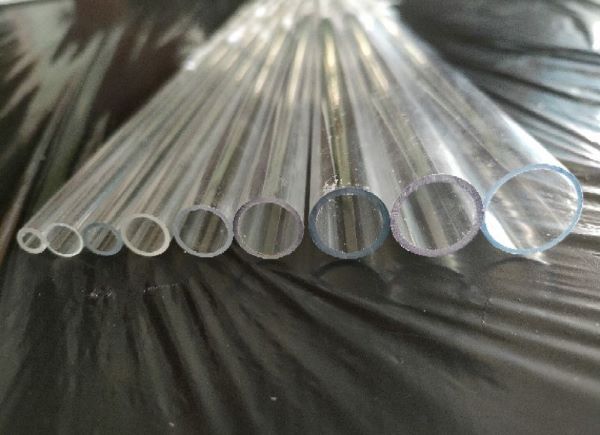
The main components of the formulation for manufacturing transparent PVC pipes
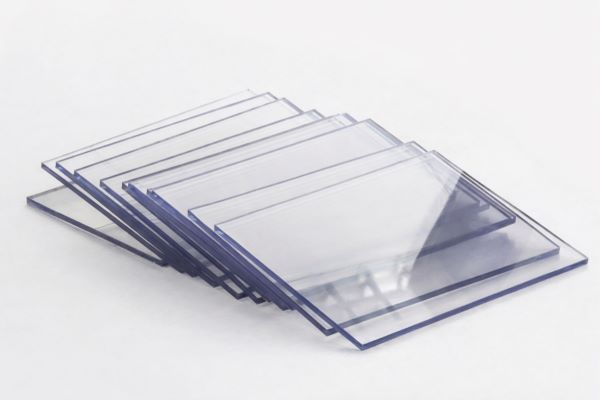
Learn about the manufacturing process of transparent PVC pipes
Advantages
In laboratories and chemical research
This is an environment that requires meticulous observation. The ability to visually monitor flow allows scientists to observe chemical reactions, color changes, or precipitate formation in real time. The chemical resistance of PVC helps protect the system from corrosion caused by common acids.
Industrial water and chemical treatment systems
Chemical manufacturing companies use transparent PVC pipes as metering pipelines. Thanks to their transparency, operators can easily detect blockages or air bubbles that may cause inaccuracies in metering pump flow rates.
Applications of transparent PVC pipes in aquariums
Aquascaping enthusiasts and aquarium system designers highly favor this type of pipe. The use of transparent PVC pipes in aquariums not only provides a refined, modern aesthetic but also allows owners to easily check the cleanliness of the filtration system. They are often combined with LED lighting to create eye-catching light effects running along the piping.
HVAC systems and condensate drainage
HVAC engineers often use transparent pipes for condensate drain lines in central air conditioning systems. This allows for quick inspection to determine whether water is pooling or if algae and mold are developing inside and causing blockages.
The food and beverage industry
Although FDA (Food and Drug Administration) certification must be verified, many high-grade transparent PVC pipes are used to convey non-alcoholic or non-strongly acidic food liquids, helping ensure effective food safety and hygiene control.
We hope this article has fully answered your question, What is a transparent PVC pipe. With its excellent visual monitoring capability, superior chemical resistance, and installation flexibility, transparent PVC pipes are truly an irreplaceable engineering solution for modern industrial systems, laboratories, and even everyday applications such as aquariums. Understanding their advantages, limitations, and technical specifications enables engineers and contractors to make informed decisions, ensuring efficiency and safety for their projects.
When implementing projects that demand strict plastic quality standards, remember that the foundation of a good product lies in the quality of its raw materials. APEX VN is committed to delivering high-quality products and services in the plastics industry, offering advanced masterbatches and plastic additives that help you perfect every project and application with outstanding aesthetics and durability. Contact us today for expert consultation and the best support for your manufacturing and supply needs!
The concept of clear PVC piping goes beyond decorative materials. In engineering applications, it functions as an extended sight glass, enabling technicians to monitor air bubbles, changes in chemical color, or the accumulation of deposits within the pipeline. If you are wondering what a transparent PVC pipe is in an industrial context, this is precisely the optimal solution for closed-loop systems.
The main components of the formulation for manufacturing transparent PVC pipes
After clearly understanding what a transparent PVC pipe is, examining its chemical composition helps explain why it possesses such high transparency and excellent chemical resistance.The main components of the formulation for manufacturing transparent PVC pipes
- Virgin PVC Resin (PVC Resin): This is the core component. The resin is carefully selected with an appropriate K-value to ensure tensile strength and optical clarity.
- Thermal Stabilizers: To maintain transparency, tin-based stabilizer systems are commonly used instead of lead or other heavy metals, which can cause haze or pose health hazards.
- Processing Aids: These improve surface smoothness, reduce flow friction, and eliminate optical defects on the pipe surface.
- Lubricants: They ensure uniform melt flow in the extrusion process without thermal degradation, helping maintain maximum transparency of the PVC pipe.
- UV Stabilizers (optional): These help prevent yellowing when the pipe is exposed to sunlight for extended periods.
The manufacturing process of transparent PVC pipes
Understanding the manufacturing process further clarifies what a transparent PVC pipe is from a technical production perspective. This process requires strict control of temperature and cleanliness to prevent contamination.Learn about the manufacturing process of transparent PVC pipes
- Step 1: Raw Material Mixing: Components such as PVC resin, stabilizers, and additives are fed into a high-speed mixer. The key difference here is that all equipment must be absolutely clean. Even a single dust particle or a trace of colored resin residue can ruin an entire batch of transparent PVC pipes.
- Step 2: Extrusion: After mixing, the compound is fed into the extruder. Under heat and pressure, the plastic melts and is forced through a shaping die. This is the most critical stage for determining the pipe wall thickness (e.g., SCH40 standard).
- Step 3: Vacuum Sizing and Cooling: After exiting the die, the pipe passes through a vacuum sizing tank to ensure a uniform circular shape. It is then cooled with water. The water used must be clean and free of minerals to prevent stains on the surface of clear PVC pipes.
- Step 4: Haul-off and Cutting: The pipe is pulled at a constant speed to ensure uniform wall thickness, then cut into standard lengths (typically 3 m or 6 m).
- Step 5: Quality Inspection: Each batch is inspected for PVC pipe transparency, pressure resistance, and impact strength before leaving the factory.
Advantages and disadvantages of transparent PVC pipes
To properly evaluate what a transparent PVC pipe is from both an economic and technical perspective, it is necessary to analyze both sides of this material.Advantages
- Excellent Flow Visibility: This is the greatest advantage. Technicians can monitor flow rate, color, and cleanliness of the medium inside without shutting down the system.
- Strong Chemical Resistance: Like standard PVC, transparent PVC pipes are resistant to most acids, alkalis, salts, and mild organic solutions, making them ideal for chemical manufacturing applications.
- Extremely Smooth Inner Surface: Minimizes friction, prevents the buildup of bacteria and deposits, and helps increase flow velocity.
- Easy Installation: Uses standard solvent cement jointing methods similar to conventional PVC pipes, without the need for complex thermal welding equipment.
- Electrical Insulation and Corrosion Resistance: Does not rust like metal pipes and is non-conductive, ensuring safety for engineering systems.
- Temperature Limitation: The operating temperature of PVC in general, and transparent PVC in particular, is typically limited to a maximum of around 60°C (140°F).
- UV Resistance: Without the addition of specialized additives, the pipe may become brittle or lose clarity when exposed to direct sunlight for extended periods.
- Cost: Due to strict manufacturing processes and the use of high-grade virgin resin, transparent PVC pipes are generally more expensive than standard colored PVC pipes.
Common applications of transparent PVC pipes
If you are looking to understand what a transparent PVC pipe is through real-world applications, the list below will surprise you with its versatility.In laboratories and chemical research
This is an environment that requires meticulous observation. The ability to visually monitor flow allows scientists to observe chemical reactions, color changes, or precipitate formation in real time. The chemical resistance of PVC helps protect the system from corrosion caused by common acids.
Industrial water and chemical treatment systems
Chemical manufacturing companies use transparent PVC pipes as metering pipelines. Thanks to their transparency, operators can easily detect blockages or air bubbles that may cause inaccuracies in metering pump flow rates.
Applications of transparent PVC pipes in aquariums
Aquascaping enthusiasts and aquarium system designers highly favor this type of pipe. The use of transparent PVC pipes in aquariums not only provides a refined, modern aesthetic but also allows owners to easily check the cleanliness of the filtration system. They are often combined with LED lighting to create eye-catching light effects running along the piping.
HVAC systems and condensate drainage
HVAC engineers often use transparent pipes for condensate drain lines in central air conditioning systems. This allows for quick inspection to determine whether water is pooling or if algae and mold are developing inside and causing blockages.
The food and beverage industry
Although FDA (Food and Drug Administration) certification must be verified, many high-grade transparent PVC pipes are used to convey non-alcoholic or non-strongly acidic food liquids, helping ensure effective food safety and hygiene control.
We hope this article has fully answered your question, What is a transparent PVC pipe. With its excellent visual monitoring capability, superior chemical resistance, and installation flexibility, transparent PVC pipes are truly an irreplaceable engineering solution for modern industrial systems, laboratories, and even everyday applications such as aquariums. Understanding their advantages, limitations, and technical specifications enables engineers and contractors to make informed decisions, ensuring efficiency and safety for their projects.
When implementing projects that demand strict plastic quality standards, remember that the foundation of a good product lies in the quality of its raw materials. APEX VN is committed to delivering high-quality products and services in the plastics industry, offering advanced masterbatches and plastic additives that help you perfect every project and application with outstanding aesthetics and durability. Contact us today for expert consultation and the best support for your manufacturing and supply needs!