
BLOG
- Home
- Blog
- Plastic Polymer Composite Article
- Detailed distinction between Filler Masterbatch and Color Masterbatch
Detailed distinction between Filler Masterbatch and Color Masterbatch
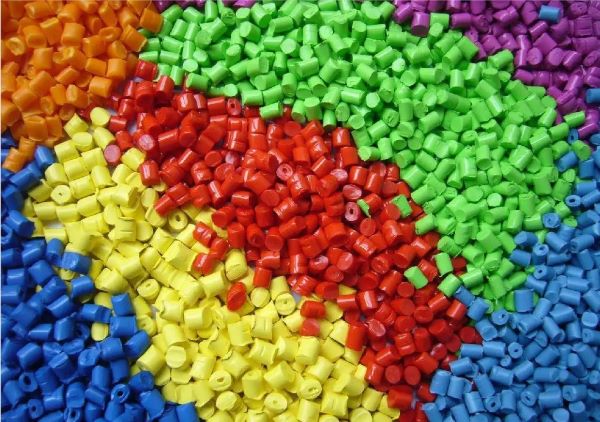
In the current plastics industry, filler masterbatch and color masterbatch are two essential additive pellets that play a crucial role in determining the quality, color, and performance of plastic products. Each type has its own characteristics and functions, helping to optimize production costs while enhancing processability and the aesthetic appeal of the final products. Understanding the differences between filler masterbatch and color masterbatch enables businesses to select the most suitable materials for specific applications.
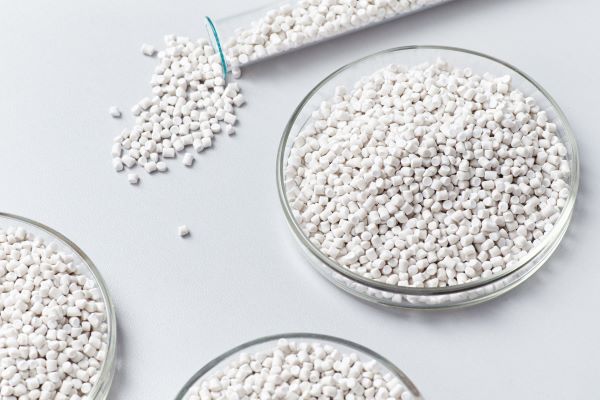
General information about Filler Masterbatch pellets
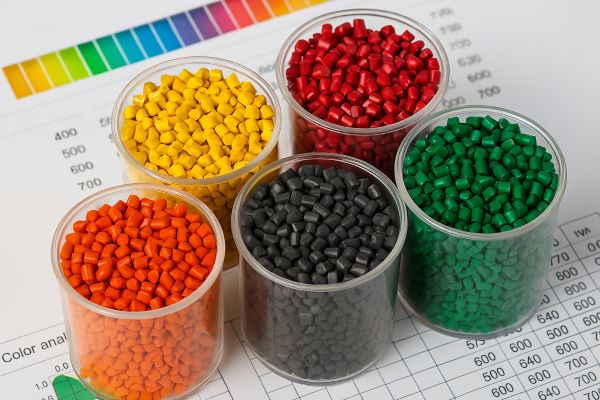
General information about Color Masterbatch pellets
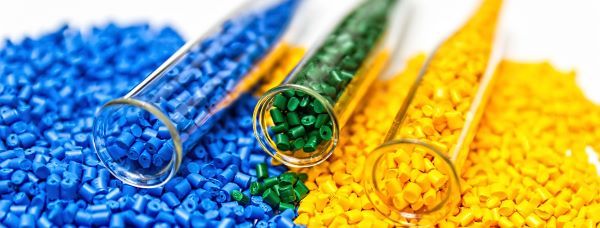
Distinguishing Filler Masterbatch from Color Masterbatch
Filler masterbatch and color masterbatch both play a crucial role in enhancing quality and optimizing production costs in the plastics industry. Although both are additive pellets, each serves different functions and applications: filler masterbatch improves mechanical properties and reduces costs, while color masterbatch provides a wide range of colors and high aesthetic value to products. Proper selection and combination of filler masterbatch and color masterbatch help businesses achieve optimal technical and economic efficiency.
Introduction to Filler Masterbatch Pellets
Filler Masterbatch (also known as filled pellets) is a concentrated mixture consisting of inorganic fillers (such as calcium carbonate, talc powder), a carrier resin, and other additives. The main purpose of filler masterbatch is to reduce production costs, enhance certain mechanical properties, and optimize the processing of virgin polymers.General information about Filler Masterbatch pellets
Composition
Main components of filler masterbatch include:- Inorganic Fillers: This is the most important component, making up a large proportion of the filler masterbatch. Common fillers include:
- CaCO3 (Calcium Carbonate): The most widely used filler due to its availability, low cost, and ability to improve stiffness, tensile strength, and impact strength of plastic products.
- Barytes (Barium Sulfate): Used to increase specific gravity, opacity, and radiation shielding capability.
- Clay: Especially kaolin, can be used to enhance stiffness, tensile strength, and flame resistance.
- Fiberglass: Although not a traditional inorganic powder, fiberglass is used in specialized filler masterbatches to significantly improve mechanical strength and rigidity of plastics.
- Carrier Resin: This is a polymer compatible with the base polymer of the final product. For example, if producing a product from PE, the filler masterbatch will also use PE as the carrier resin (PE filler masterbatch). Common carrier resins include PE and PP. The carrier resin helps evenly disperse the filler particles during mixing and processing.
- Additives: Some additives may be added to enhance the performance of the filler masterbatch or the final product, for example:
- Dispersing agents: Help fillers disperse better in the polymer, prevent agglomeration, and ensure uniformity.
- UV stabilizers: Protect the plastic product from UV damage, extending its lifespan.
- Antioxidants: Prevent polymer degradation during processing and use.
- Whitening agents: Typically TiO2, added to increase whiteness and opacity of the product.
Applications
The main applications of filler masterbatch in the plastics industry include:- Reducing raw material costs: This is the most prominent function of filler masterbatch. By replacing a portion of expensive virgin polymer with cheaper fillers, businesses can significantly reduce production costs. The impact of CaCO3 filler masterbatch on production costs is especially noticeable in high-volume manufacturing.
- Improving mechanical properties:
- Increasing strength and stiffness: Products can become harder and less prone to deformation.
- Enhancing tensile strength: Depending on the type of filler and mixing ratio, tensile strength can be improved.
- Dimensional stability: Reduces shrinkage and warping, which is particularly important in applications requiring high precision.
- Increasing heat resistance: Some fillers can help raise the softening point of plastics.
- Enhancing processability:
- Improving melt flow: In some cases, filler masterbatch can enhance the flow of molten plastic, making injection molding or extrusion easier.
- Reducing production cycle time: Better melt flow can shorten cooling times and overall production cycles.
- Lowering energy consumption: Easier processing reduces energy requirements.
- Increasing opacity and printability: Fillers help increase product opacity, which is useful for packaging or light-blocking applications. Additionally, surfaces containing filler masterbatch often have better ink adhesion.
Applications
Filler masterbatch is widely used in various plastic manufacturing industries:- Packaging production (films, bags, bottles, boxes): PE filler masterbatch and PP filler masterbatch are popular choices to reduce costs, increase stiffness, and enhance durability for packaging products such as plastic bags, films, and bottles. This is a typical application of filler masterbatch in the packaging industry.
- Household products: Plastic chairs, tables, sinks, and other plastic components in household items.
- Automotive components: Certain interior parts, cable coverings, insulating panels, where stiffness and dimensional stability are required.
- Construction materials: PVC pipes, ceiling panels, insulation boards, and other plastic components used in construction.
- Blow molding products: Bottles, jars, and plastic cans.
- Extruded products: Pipes, profiles, and plastic sheets.
Introduction to Color Masterbatch Pellets
Color Masterbatch is a concentrated mixture of pigments, carrier resin, and additives. The main purpose of color masterbatch is to provide the desired color to plastic products efficiently, uniformly, and durably.General information about Color Masterbatch pellets
Composition
The main components of color masterbatch include:- Pigments/Dyes: This is the component that determines the color.
- Inorganic pigments: Metal oxides (e.g., Titanium Dioxide - TiO2 for white, iron oxides for red, yellow, black), Carbon Black (for black). Inorganic pigments generally have good heat resistance and lightfastness.
- Organic pigments: Provide a wider, brighter color range but may have lower heat and light stability compared to inorganic pigments.
- Special effect pigments: Metallic powders, fluorescent powders, pearlescent powders, or color-shifting powders to create unique visual effects.
- Carrier Resin: Similar to filler masterbatch, the carrier resin in color masterbatch must be compatible with the base polymer of the final product. The carrier resin helps evenly disperse pigment particles within the polymer, ensuring uniform color distribution.
- Additives:
- Dispersing agents: Important for ensuring pigments are well-dispersed and preventing streaks or spots.
- UV stabilizers: Protect colors from fading due to UV exposure, especially important for plastics exposed to sunlight.
- Antioxidants: Prevent color changes caused by oxidation.
- Effect enhancers: For example, pearlescent agents or gloss enhancers.
Applications
The main applications of color masterbatch are:- Providing uniform and durable color: Ensures products have the exact color required, without streaks or fading over time.
- Controlling color quality: Helps maintain consistency of color across different production batches.
- Ease of use and handling: In pellet form, color masterbatch is easier to measure, mix, and feed into processing machines compared to pure pigments, making production cleaner (low-dust masterbatch) and safer.
- Enhancing product aesthetics and value: Color plays a key role in attracting customers and conveying brand messages.
- Improving production efficiency: The mixing ratio of color masterbatch is typically very low (from 0.5% to 5%), allowing efficient coloring with a small amount of material.
Applications
Color masterbatch is present in most colored plastic products:- Food and beverage packaging: Bottles, milk cartons, caps, food wrap films.
- Household products: Kitchenware, electronic devices, children's toys.
- Automotive components: Vehicle interiors, lamp housings, various interior and exterior plastic parts.
- Textile fibers: Synthetic fibers for producing fabrics, carpets, and nets.
- Construction materials: Water pipes, roofing sheets, plastic window frames.
- Medical devices: Plastic parts of medical equipment (requiring stable and safe colors).
- Consumer goods: Toothbrushes, pen barrels, stationery items.
- Plastic films: Packaging films, agricultural films, industrial films.
Comparison between Filler Masterbatch and Color Masterbatch
Distinguishing between filler masterbatch and color masterbatch is a key factor for manufacturers to select the right product and optimize processes and costs. Although both are concentrates added to virgin polymers, their purposes, main components, and effects on the final product are completely different.Distinguishing Filler Masterbatch from Color Masterbatch
Similarities
- Concentrates: Both filler masterbatch and color masterbatch are pelletized concentrates designed for easy mixing with virgin polymers during processing.
- General structure: Both consist of a carrier resin compatible with the main polymer of the product, active components (fillers or pigments), and additives.
- Purpose of improving plastic products: Both types of masterbatch are used to enhance certain aspects of the final plastic product, whether it is mechanical properties, cost, or color.
- Need for uniform dispersion: To achieve optimal performance, both the fillers in filler masterbatch and the pigments in color masterbatch must be evenly dispersed in the carrier polymer during processing. Poor dispersion can lead to issues such as streaks or spots (for color masterbatch) or mechanical weaknesses (for filler masterbatch).
- Compatibility with base polymer: Both require the carrier resin to be compatible with the product’s base polymer to ensure smooth mixing and processing, as well as the integrity of the final product.
Differences
| Criteria | Filler Masterbatch | Color Masterbatch |
| Main purpose | Reduce costs, improve mechanical properties (strength, stiffness), increase opacity, optimize processing. | Provide desired color, uniform and durable appearance for the product. |
| Active components | Inorganic fillers (CaCO3, talc, clay, barytes, etc.) | Pigments (inorganic or organic) and dyes |
| Mixing ratio | Usually higher (5% - 70%, or even higher for certain specialized applications) | Usually lower (0.5% - 5%, depending on color intensity and polymer type) |
| Impact on cost | Significantly reduces raw material costs | Increases raw material costs (due to pigment price) |
| Mechanical effects | Improves strength, stiffness, tensile strength, dimensional stability. May reduce impact strength if overused (risk of excessive filler masterbatch). | Does not significantly affect mechanical properties unless combined with functional additives |
| Appearance effects | Increases opacity, making products non-transparent | Provides a wide range of colors, either transparent or opaque depending on pigments and purpose |
| Processing effects | Can improve melt flow, reduce shrinkage, shorten production cycles | Does not directly affect processing traits unless special additives are used |
| Sustainability | Helps reduce virgin polymer usage, but the origin of fillers and recyclability should be considered | Enhances aesthetic quality and color durability, but environmental impact of pigments should be considered. Bio-based fillers are increasingly favored |
| Typical applications | Thin-film packaging, plastic pipes, household parts not requiring transparency | All colored plastic products, from toys to electronic components and packaging |
Filler masterbatch and color masterbatch both play a crucial role in enhancing quality and optimizing production costs in the plastics industry. Although both are additive pellets, each serves different functions and applications: filler masterbatch improves mechanical properties and reduces costs, while color masterbatch provides a wide range of colors and high aesthetic value to products. Proper selection and combination of filler masterbatch and color masterbatch help businesses achieve optimal technical and economic efficiency.